Pollination is the transfer of pollen by pollinators to different plants and flowers. Your typical, most well-known pollinators include the honeybee and the bumblebee, but there are many more than that.
Chris Beck is a 5th generation beekeeper out of Breckenridge. He has been beekeeping for over 20 years.
“You know people have dogs and cats for pets, and my families always had honeybees around,” said Beck.
Beck recently retired from his day job to pursue beekeeping full time. He works for a honeybee migrator out of St. Charles.
“There’s no question that the honeybees help the environment simply by pollinating the flowers that they come across,” said Beck. “And as such, the flowers, the plants, the trees are all able to easily reproduce. And not only propagate themselves but offer more food and shelter, etc. for all the other creatures that live in the same environment.”
Pollination helps plants everywhere all around the world, but there are some plants that are specific to Michigan that rely on pollination, like cherries, apples, and blueberries.
“[Those] are a couple of the big crops here and in Michigan that do benefit the quality of the fruit, the size of the fruit, the shape of the fruit, and of course for the farmer, most importantly the yield,” said Beck.
Erika Kemler is the Director Forest Hill Nature Area in Alma, Michigan. She lists flies, butterflies, moths, and bats as other pollinators that are essential to the environment.
“I think it’s important to note that bees are not the only pollinators,” said Kemler. “It’s like if we don’t have these insects, our ecosystem is potentially gonna collapse.”
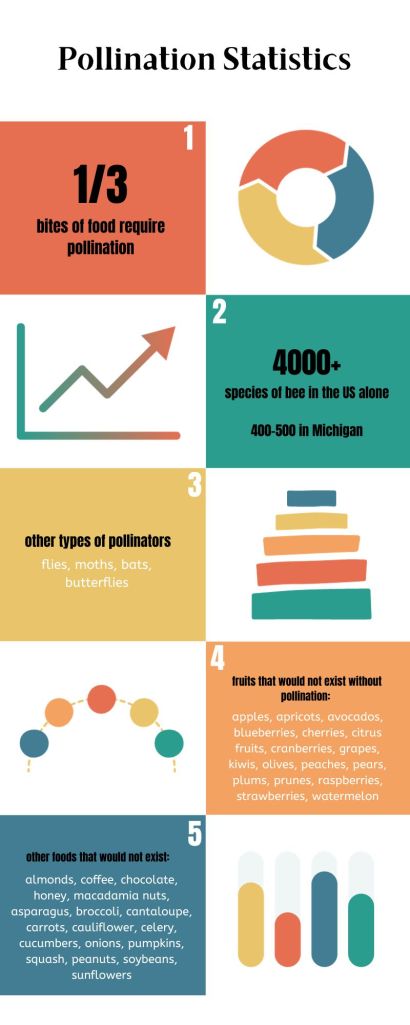
We cannot survive without pollination. One in every three bites of the food we eat requires pollination to have been made.
“I’m always so hesitant to say how these animals benefit us because I feel like in our culture, we’re so focused on ‘how does this benefit me’,” said Kemler.
If we do not take care of our insects and instead let them die, we could lose a lot of the food we have in our daily diet, according to Erika. Fruits like apples, cherries, watermelon strawberries are among the fruits Erika listed as threatened by low pollination rates. Other threatened foods include pumpkin, broccoli, asparagus, carrots, almonds, macadamia nuts, etc.
“Some of the plants that we would lose right away, and we’re on the cusp of losing, they’re really threatened, are things like chocolate, cocoa beans, coffee beans,” said Kemler. “We would be missing a huge amount of our diet. Just like with our insects, if we don’t have a good balanced diet with all the right things, our health is going to deteriorate even more than it already has.”
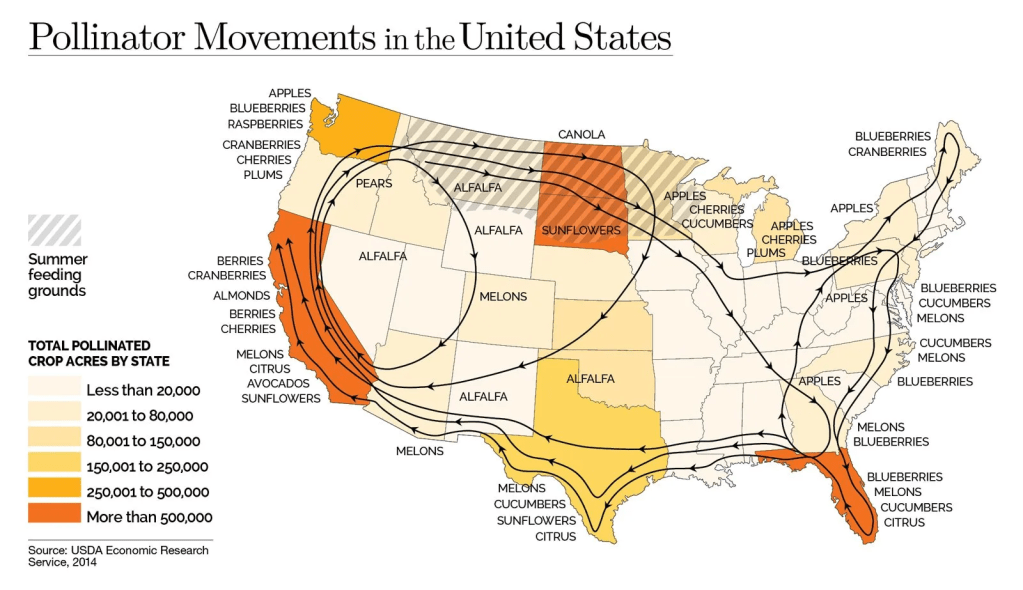
Honeybee migration is a major market in the United States right now. To have honeybee boxes full of tens of thousands of honeybees and moving them around the country to pollinate different plants throughout the different food seasons is giving a lot of beekeepers a good paycheck.
Pollinator Migration Map:
Karl Geiger, local Mount Pleasant beekeeper, talks about migration, his honeybees, and honeybee health in this video:
Varroa mites arrived in the United States in the 1980s and have been causing issues ever since.
“There absolutely is an issue with the health of the honeybees,” said Beck.
The main issue with the health of honeybees, according to Beck, is the varroa mite, which is a parasite that lives within the beehive and makes honeybees sick.
“A big challenge of any beekeeper of any size, whether that’s a hobby-ist or a commercial beekeeper, basically trying to minimize the number of mites in the beehive so that they don’t spread disease and cause issues,” said Beck. “So, any beekeeper that has honeybees that does not take steps to control the varroa mite could easily loose that hive. It could perish within one season, one year.”
Erika has worked with native bees much more than honeybees. About the migration of honeybees, she is not sure that it’s the best thing for the environment or for bee health.
“Think about it, if you’re shipping honeybees from Georgia to California, what else are you taking with those honeybees?” said Kemler. “Those bees are visiting flowers that native bees visit too. So varroa mites are a problem for our native bees because they’ve been introduced through our honeybees.”
Since the varroa mite affects all bees and could be spread through honeybee migration, varroa mites can affect native bees as well. There are around 4000 bee species in the Unites States, and 400-500 species in Michigan alone.
“One of the cool features of our native bees is that they’re really good pollinators to certain plants because they have specialized and co-evolved with native plants,” said Kemler. “Which there are fewer and fewer of due to habitat loss, which of course impacts the native bees.”
“Honeybee pollination allows other flora and fauna to flourish,” said Beck. “Honeybees thrive because when they collect the pollen and the nectar from these plants, they’re also able to pass along their fortune by helping their environment around them.”
With there being such a variety of bees out there, Kemler thinks it’s unfortunate that native bees do not get the same attention that the honeybees do. Every individual animal has its own role in the environment, including the different species of bees. Given the thousands of bee species the nation has alone, the ecological importance is clear by the numbers of diversity.
“I mean, if you lose honeybees, yes, you’re losing a huge commodity, but if you lose 4000 different species of bees that maybe can only pollinate a few individual, unique flowers shapes like our tubular flowers… you’re actually losing a huge amount of diversity,” said Kemler.
Native bee homes on the property of Forest Hill Nature Area in Alma, Michigan:
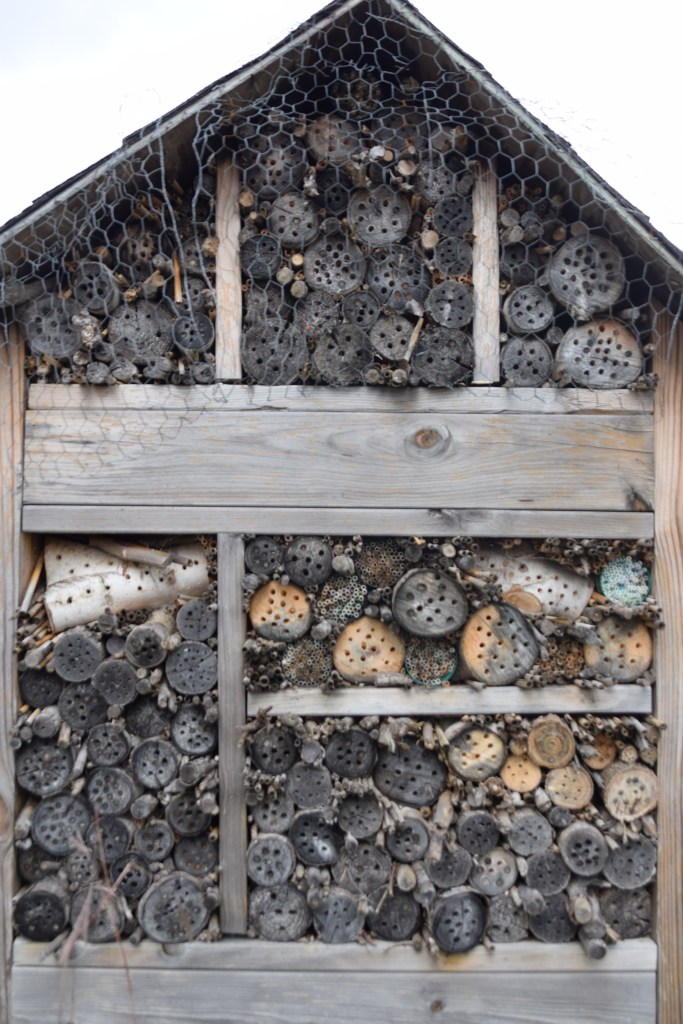
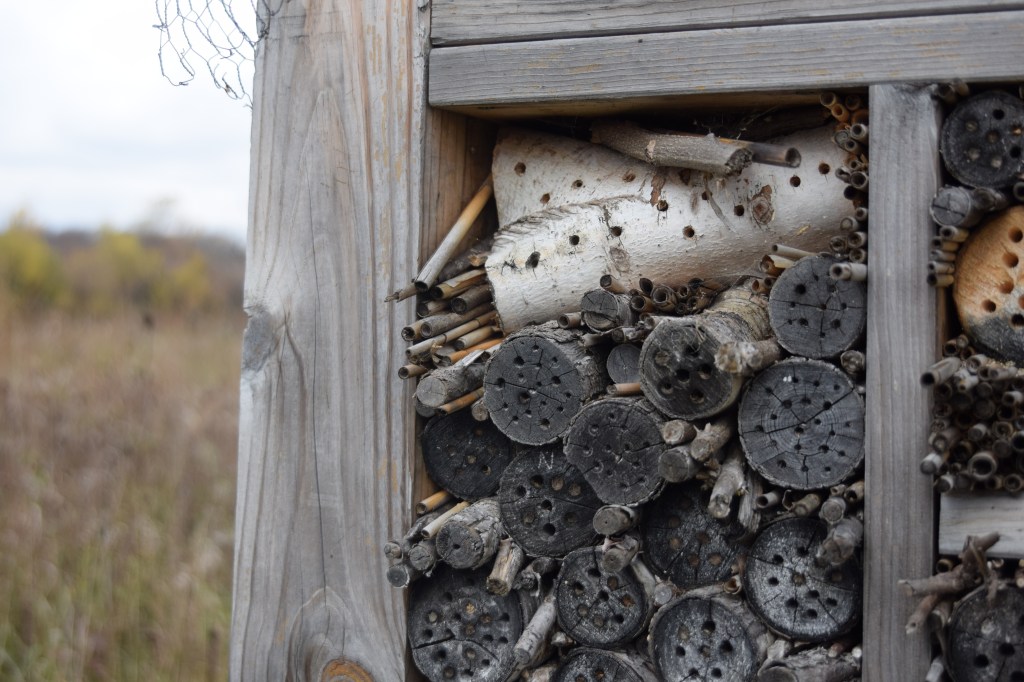
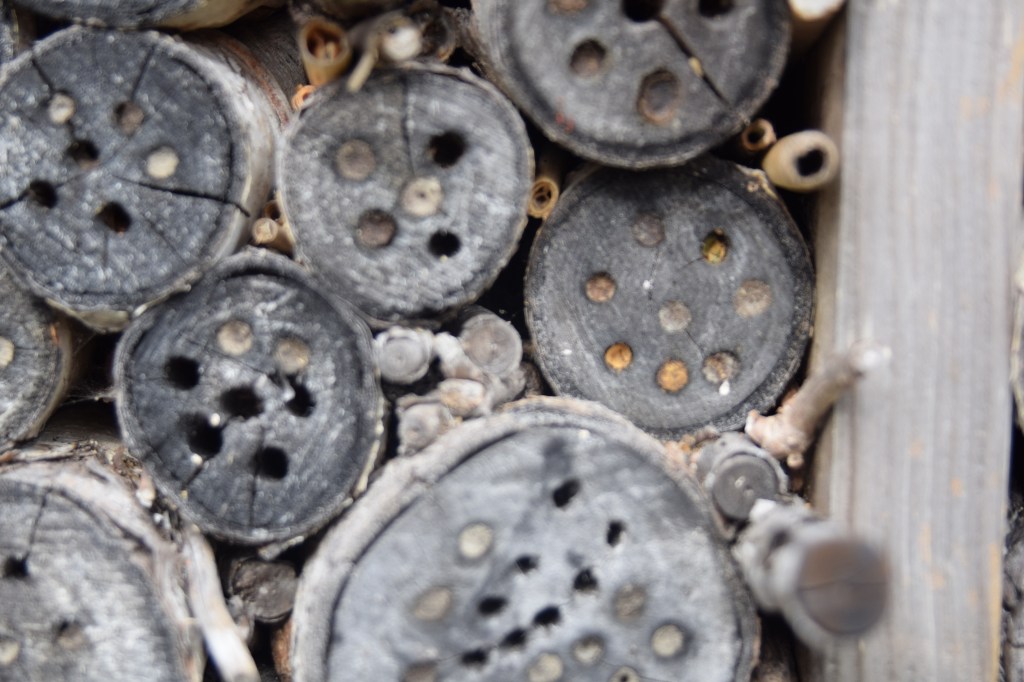
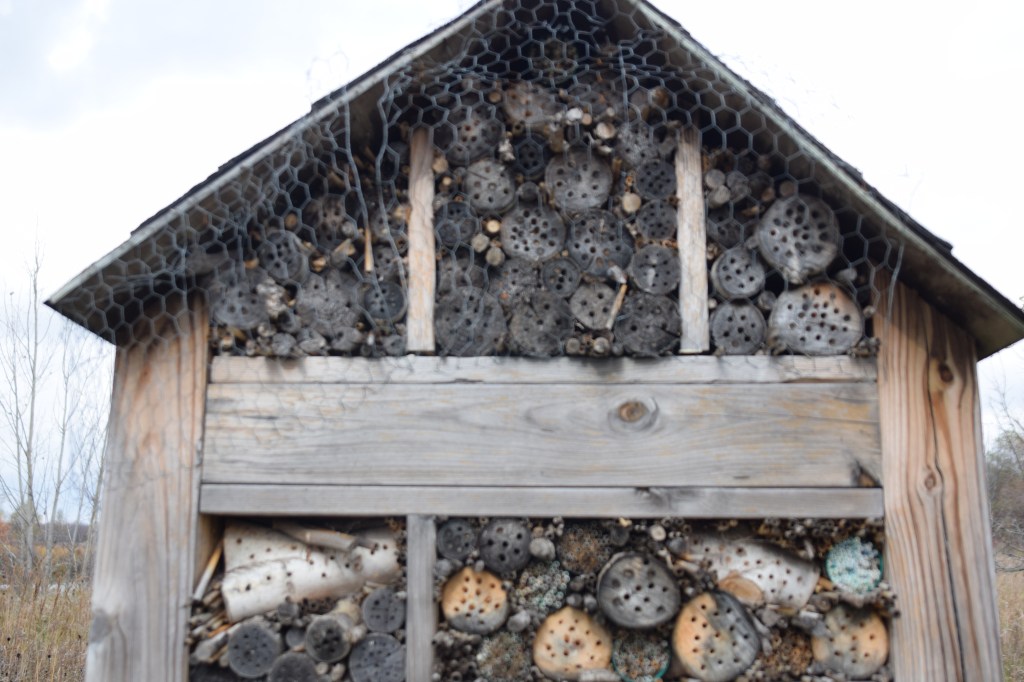
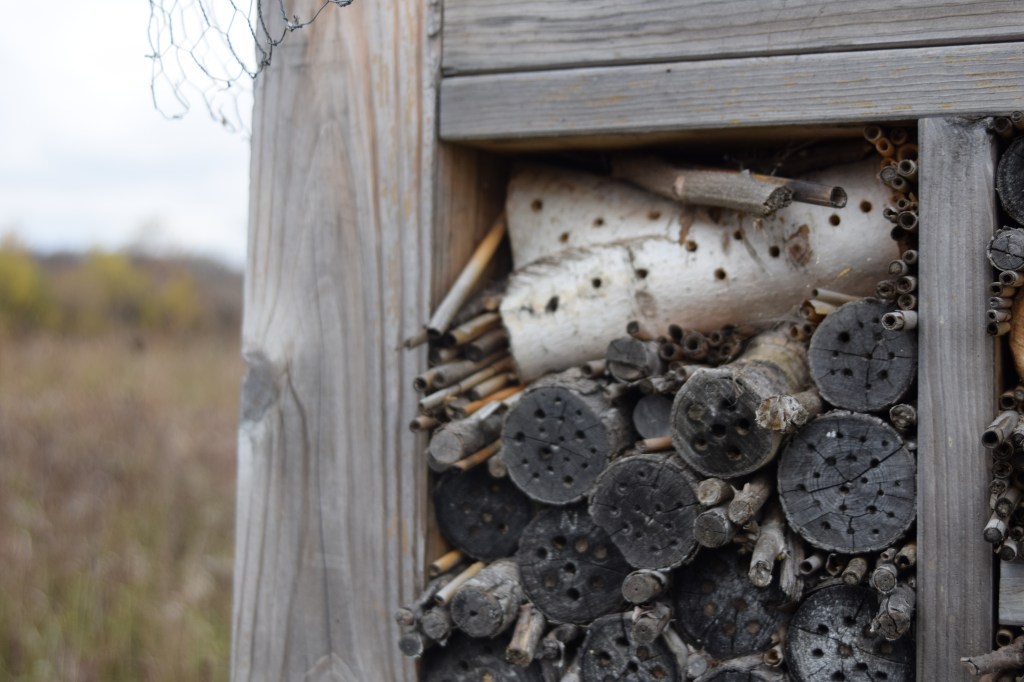
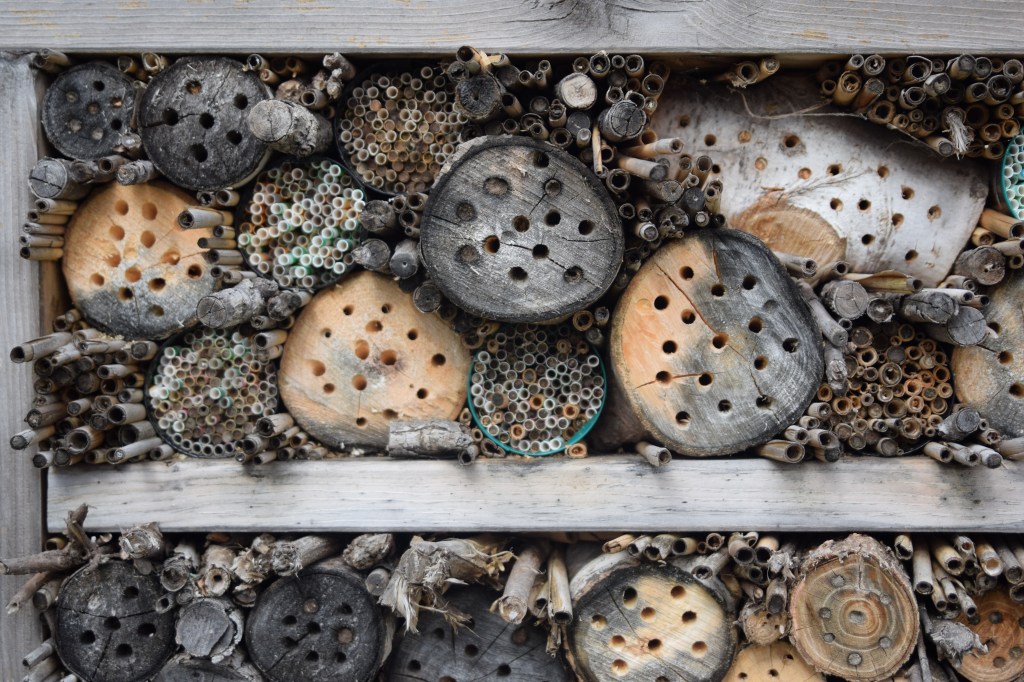
Unlike native bees and their history without much of society’s attention, there have been businesses built from what honeybees provide.
“Honeybees are important, they’re hugely important, especially because we have built these agro-businesses, multi-million-dollar businesses on this concept, but yet our native bees are so efficient and sometimes better at most plant pollination,” said Kemler.
According to Erika, the industry that has been built from honeybees is the reason why they get so much more attention that native bees. Native bees don’t ‘give’ us anything, like honey or beeswax, so there would be no money in that industry if it were to be pursued.
“That’s why so many people do bee research on honeybees, because we have built a system on their backs. Yet, is that the best way to build a system? Dependent upon one species?” said Kemler.
Having a good diet is just important for our pollinators as it is for people. Native bees, and other pollinators in general, need sufficient biodiversity in order to have a healthy diet.
“I think a part of pushing our bees and our understanding of it is realizing that bees have to eat. And they need a good variety of pollen, even honeybees do. Eating the same type of pollen isn’t ideal. Remember, pollen is their food. Nectar is their food,” said Kemler.
Since Michigan has become home to many invasive species, there have been false stigmas about different plants and animals in the area. Given that a lot of these invasive species or plants have to now co-exist with native species and plants, there are problems that occur.
“These are plants that are invasive and ecologically have no impact. People buy them because it says ‘won’t get eaten by insects’, ‘it’s pest-resistant’. But then that means that no insects can eat them. And we need our insects. We need to provide food for our insects,” said Kemler.
Although insects do damage trees, and can even kill them, Erika believes that since the native species have co-evolved, then it doesn’t damage the species as a whole.
“Generally, if it’s a native insect and a native tree, there’s give and take. The tree may receive damage but the tree will grow back. Now if it’s an invasive insect and a native tree, not so much,” Erika said.
Although Beck and Geiger emphasize honeybees and Kemler emphasized native bees, they are all important to the environment through their ability to pollinate. As said, economies would collapse without them.
“You can’t just look at one piece of the puzzle, you have to think about it like the whole system. If you were to take out pollinators, your system is just in big trouble,” said Kemler.
 Paige Hassen: JRN
Leave a comment