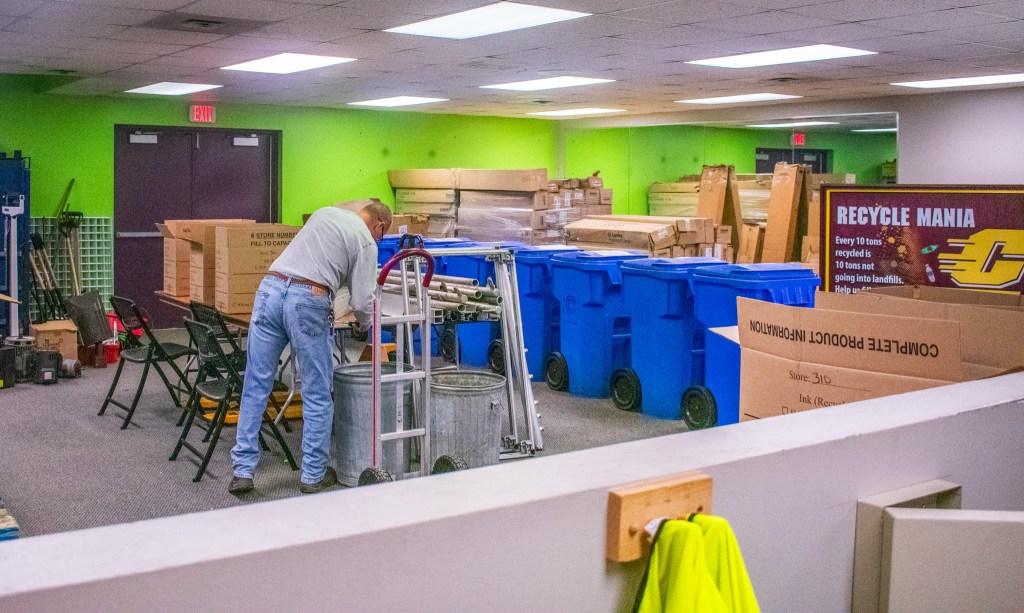
Recycle and Sell: Central Michigan University Recycles, Composts
Donald Long is the Recycling Coordinator for Central Michigan University’s Facilities Management. The center is located by the train tracks on the South side of campus, Southeast of the Kelly Shorts Football Stadium.
Long has been working with Facilities Management and recycling for decades. He and his wife commute to their respective jobs every day, as they live in St. Louis, Mich. He enjoys living out of the city and in an area with acreage.
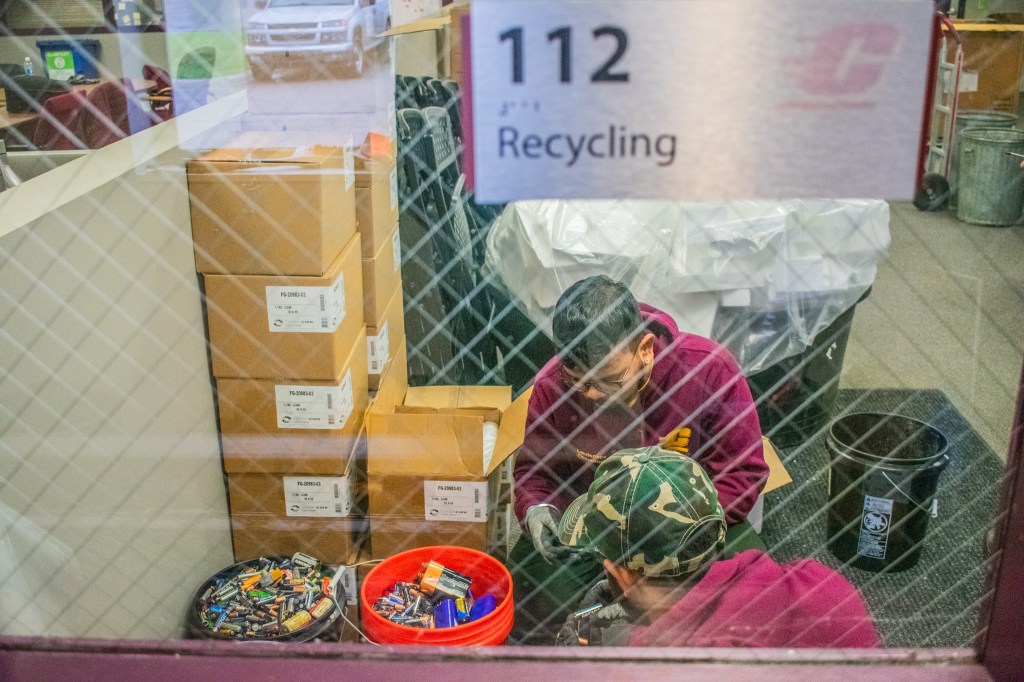
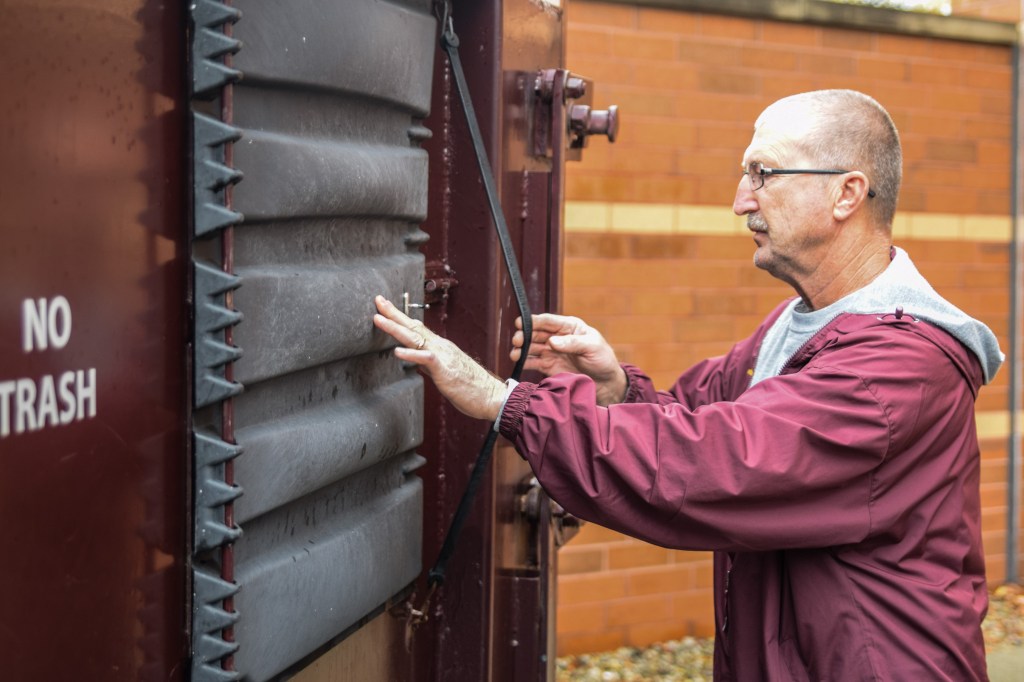
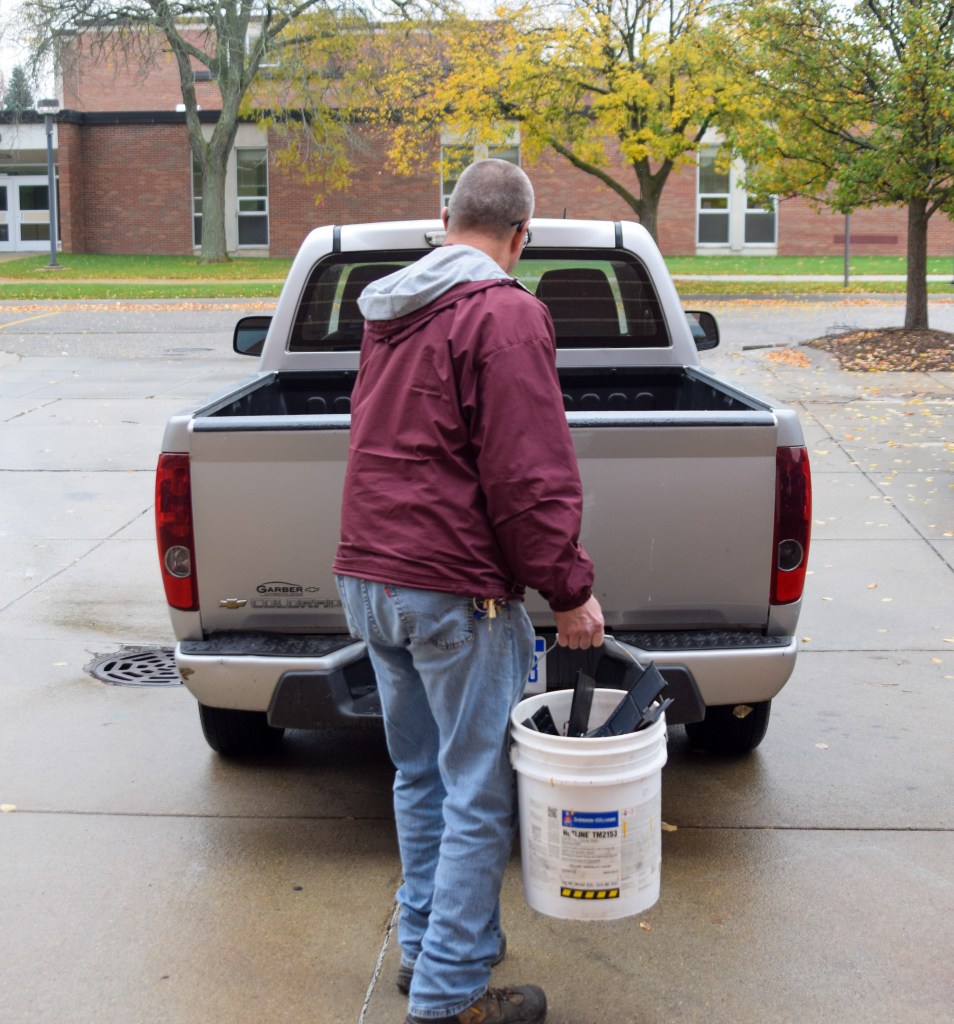
Some of Long’s job requirements at the Recycling Center include placing orders, picking up a wide variety of recycled materials from all around campus, and separating materials so that they can sell them off. Multiple student workers help him on a daily basis. (See Photo 1.)
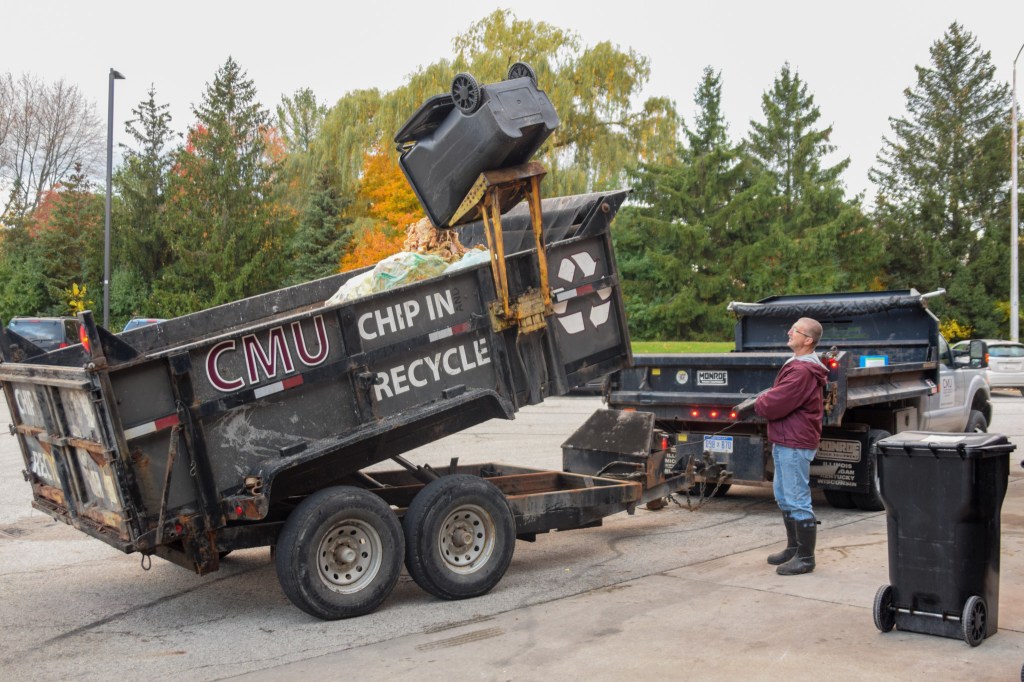
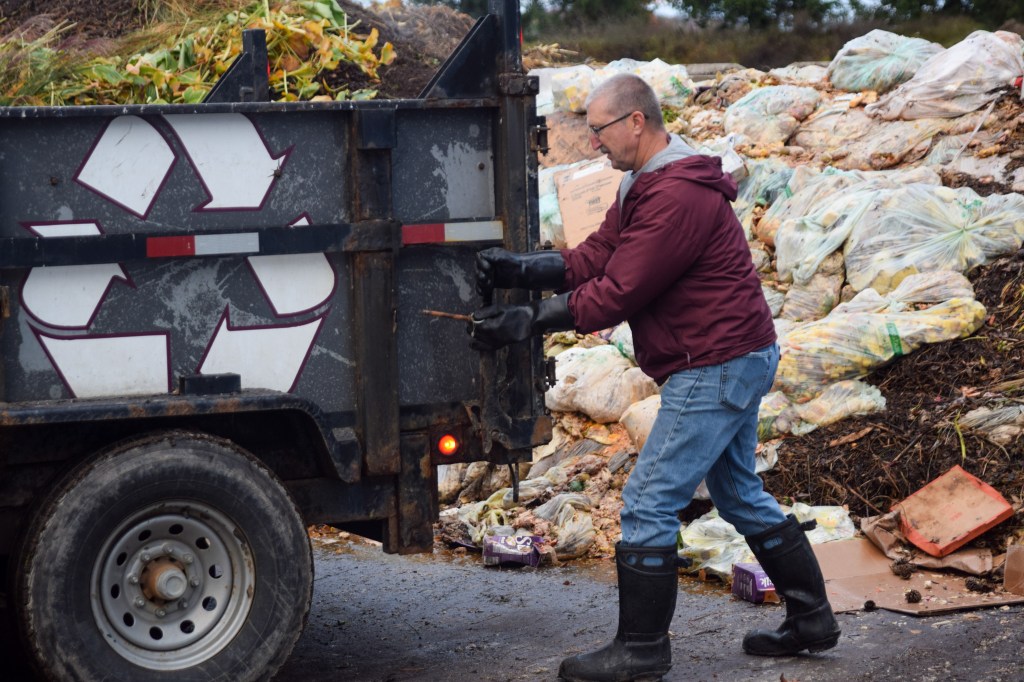
Composting is one of the recycling components that CMU focuses on. Compost is defined by the Merriam-Webster dictionary as “a mixture that consists largely of decayed organic matter and is used for fertilizing and conditioning land.” After picking up compost from around campus on Monday, Wednesday, and Friday mornings, Long dumps the compost into a large pile on the Facilities Management grounds, which has quite the smell to it. (See Photo 5.)
“I tell people that if it stinks, it’s my job,” Long said, laughing.
Compost is picked up on campus from dining halls, restaurants, coffee shops, and other places that produce food waste. The green compost bags used around campus are made of cornstarch, which are also completely compostable, so having them in the pile does no harm to the environment. (See Photo 3, 5.)
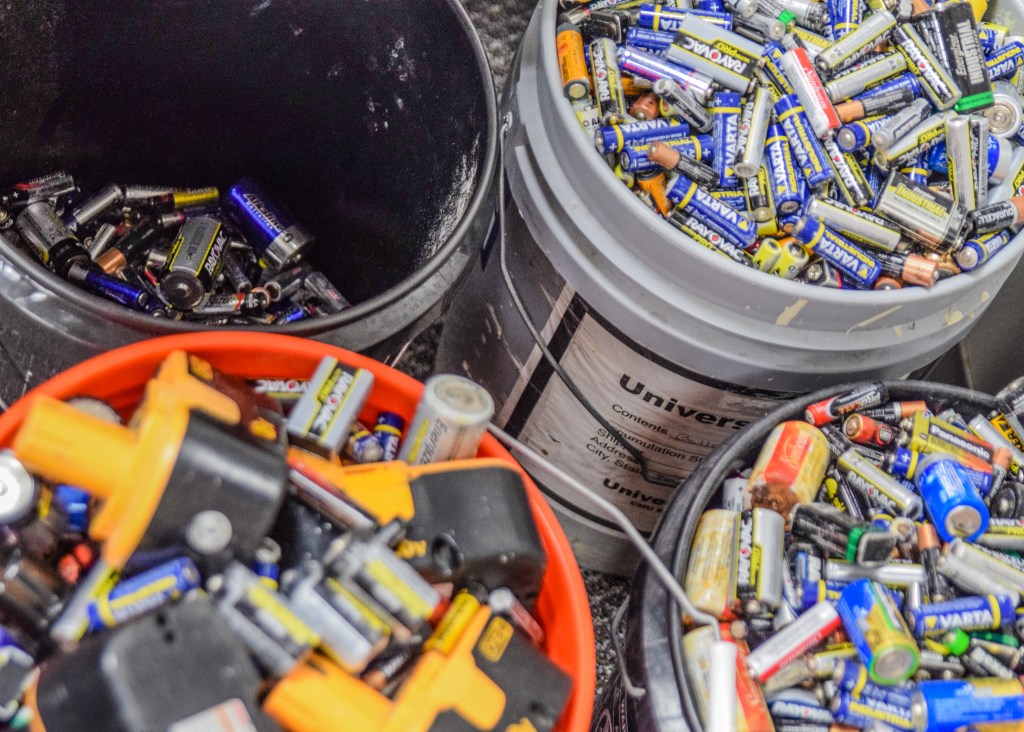
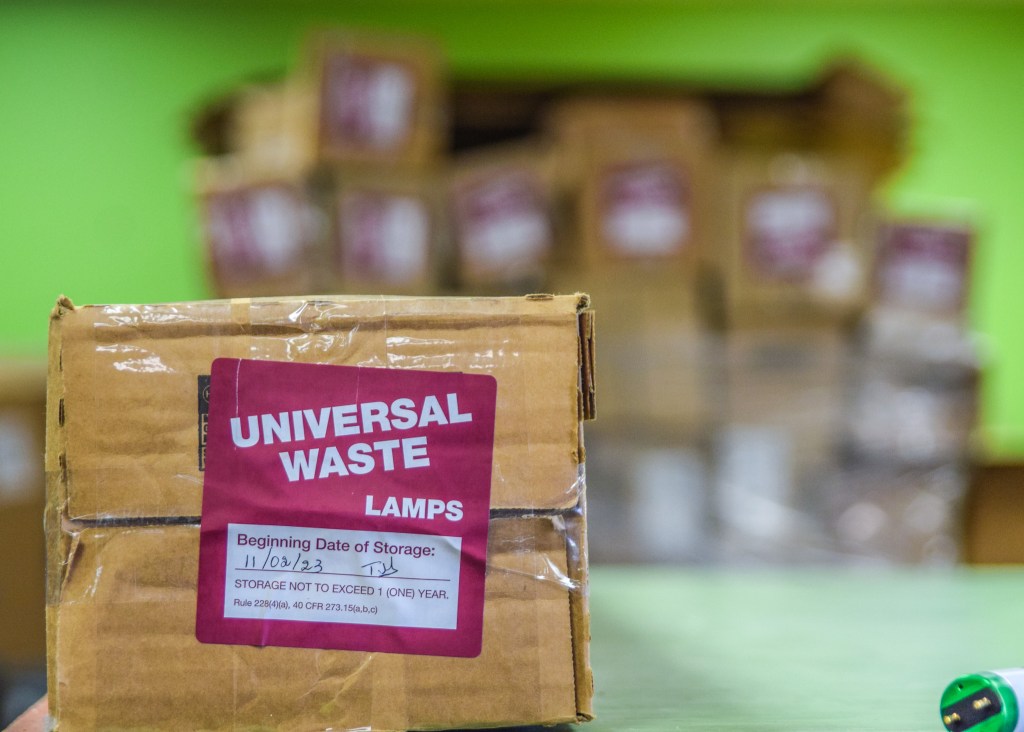
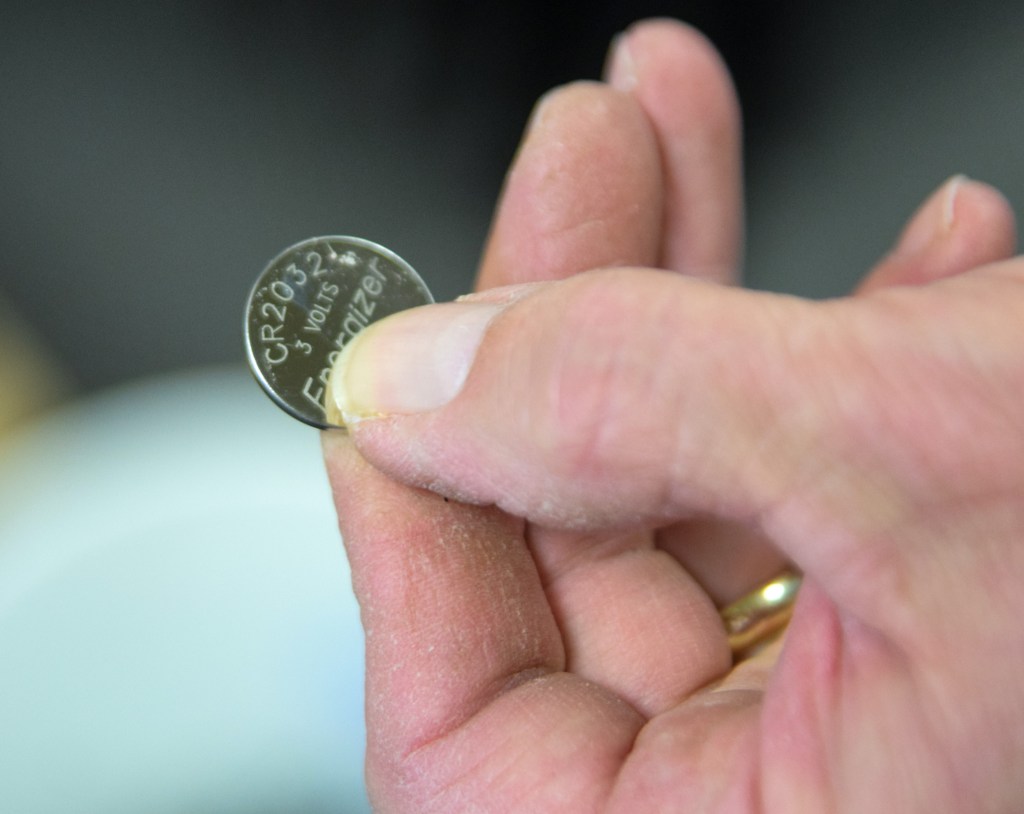
A key part of keeping recycling bins around campus is making sure to meet a state-mandated deadline by putting stickers on them, like with batteries. (See Photos 1, 4, 8.) The stickers are to make sure the materials, like the batteries, are being recycled within an appropriate or safe amount of time.
“Batteries have to be picked up within one year,” said Long. “The stickers are part of the health and safety regulations put in place.”
Mostly leaving battery pick-ups to his student workers, Long has them separate the batteries by lithium and alkaline for proper disposal protection. (See Photo 1, 4, 8.) There is also a bucket full of sand nearby in case any battery fills with fluid and starts a fire.
Recently, since CMU has begun converting to LED lights throughout campus, the amount of lightbulb waste on campus has drastically decreased. (See Photo 6.)
“We used to have to ship out these carts of light bulbs two, three times a year,” said Long, “And it would cost $9000 to do it every time. Now, [since switching to LED bulbs] it’s just once.”
CMU has one of the highest waste-diversion rates of a college campus across the entire nation, competing in events such as the Campus Race to Zero Waste, with a large thanks to Long and his team. Waste-diversion is the percentage of waste that is diverted away from a landfill to other places, an example being when things are composted and put into a compost pile which is much better for the environment.
My experience:
I thoroughly enjoyed covering the CMU Recycling Center for this second picture story assignment. Donald Long was a very active subject, being open for most of my photo requirements. The only thing I wish I could have done differently was getting more photos of his face. While he was a little bit camera shy, I feel as though the focus on the recycling aspect of photos was almost necessary.
Being an environmental science minor, I was excited when the environmental topic was added to the list of possibilities to cover in one of our three picture stories. I want to work with recycling in my future, so I thought this would be a perfect opportunity to get to know a little more about the process, especially on a college campus. I reached out to Donald Long and heard back very quickly.
One thing I liked about this assignment was how much I got to know about him as a person. I came into the assignment really only caring about covering recycling, but I am so glad that I got to know Long on a personal level. I feel like that is one of the beautiful things about photojournalism, specifically photography.
I went a decent number of times to get photos, too. I still have to go back to get a final portrait of him, but that would make it seven visits I believe.
I really enjoyed being able to tag along with Long to watch the compost process. I feel as though those were my best photos. If I could have done the entire story on the compost photos, I might have seriously considered it.
I enjoyed this experience a lot. It was a little bit challenging to be creative with what I made, especially given the size of the recycling center room, but I feel as though being able to go along on recycling pick-up trips really helped push the story forward. I also would have wished that I completed a more formal interview. We had a lot of important conversations during the times I was taking photos that I got a lot from, but even more would have been nice, too. I hope to continue to see CMU improve their recycling methods.
 Paige Hassen: JRN
Leave a comment